-
Crypto Gambling in 2025: What U.S. Players Need to Know Before Betting with Bitcoin and Altcoins
Crypto Gambling in 2025: What U.S. Players Need to Know Before Betting with Bitcoin and Altcoins

It\'s 2025. And honestly, if you were sleeping on crypto gambling even two years ago, you\'ve missed a seismic shift. I\'ve watched this space evolve longer than I care to admit, and the transformation for American players specifically — it\'s not incremental. It\'s wholesale. Betting with Bitcoin or altcoins isn\'t a novelty anymore; it\'s become the primary workaround for millions of U.S. players locked out of traditional payment rails. But before you start moving funds around, there\'s stuff you need to know. Real stuff. Not the sanitized \'here are the pros and cons\' version.
The Rise of Crypto Gambling in the U.S.
Why the explosion? Simple — American players have been fighting banking restrictions for years. Decades, really. Federal law has made it genuinely difficult for online casinos to process payments for U.S. customers, and the traditional banking system has been an active obstacle, not a neutral party. Crypto sidesteps all of that. Completely. When you transact with decentralized currency, you\'re your own bank — no intermediary to flag the deposit, no five-day hold while some compliance team reviews your withdrawal.
That freedom is intoxicating. Combine it with growing mainstream acceptance of digital assets and you get — well, you get exactly what we\'re seeing now. A boom. And it\'s not slowing down.
How Crypto Gambling Works
New to this? It sounds more complicated than it is. Four steps, roughly:
- Get a Wallet: You need somewhere to store your coins. Software wallets like Exodus or Trust Wallet live on your phone or computer. Hardware wallets — Ledger being the most common — are physical devices, more secure, better for larger holdings. Start with software if you\'re just testing the waters.
- Buy Crypto: Coinbase, Kraken, take your pick. Buy Bitcoin, Ethereum, whatever the site accepts. This part is genuinely easy now. Easier than it was in 2018, I\'ll tell you that.
- Deposit at a Casino: Navigate to the cashier, pick your coin, copy the wallet address they give you, send your funds. Usually lands within minutes. Sometimes seconds. It\'s almost anticlimactic the first time — you expect more friction and there just... isn\'t any.
- Play and Withdraw: Withdrawals work the same way in reverse. Give them your wallet address, they send your winnings. Not in 3-5 business days. In minutes. This is where crypto genuinely embarrasses traditional banking.
Bitcoin vs. Altcoins — Which Should You Bet With?
Bitcoin is the name everyone knows, but it\'s not always the right tool for gambling in 2025. Here\'s my honest breakdown — and I\'ve used most of these:
- Bitcoin (BTC): King of the hill, universally accepted, trusted. Also — occasionally slow and expensive when the network clogs. Reliable, but clunky at peak times. Not ideal for frequent small transactions.
- Ethereum (ETH): A lot of interesting casino tech is built on Ethereum — smart contract games, verifiable randomness. The catch? Gas fees. They can be brutal. I\'ve seen $15 fees on a $30 deposit. Do the math on that one.
- Litecoin (LTC) & Bitcoin Cash (BCH): Faster, cheaper, designed specifically to fix Bitcoin\'s transaction problem. Underrated for gambling. LTC especially — it\'s boring in the best possible way.
- Solana (SOL) & TRON (TRX): Newer generation. Fast — genuinely fast — and fees are basically negligible. Growing adoption among gambling platforms. If efficiency is your priority, look here first.
My suggestion? Don\'t put all your eggs in one blockchain. LTC for day-to-day deposits, maybe SOL if the site supports it. But check what the casino actually accepts before buying anything — learned that the hard way at some point around 2021, don\'t recommend it.
Is Crypto Gambling Legal for U.S. Players?
The million-dollar question. Complicated answer: gray area. No federal law explicitly criminalizes an individual placing bets online using cryptocurrency. The UIGEA — Unlawful Internet Gambling Enforcement Act, 2006 — goes after banks and payment processors, not players. And since crypto transactions are peer-to-peer, they don\'t route through U.S. banking infrastructure. So the law\'s primary mechanism doesn\'t really apply.
Most offshore crypto casinos accepting American players operate under Curaçao licenses. Does that make it \'legal\'? Not exactly. Does it make it illegal? Also not exactly. You\'re in unregulated territory. The platforms aren\'t accountable to U.S. law, and neither are you — technically. But \'technically not illegal\' and \'completely safe\' are different things. Don\'t confuse them.
States Where Online Gambling Is Regulated
New Jersey, Pennsylvania, Michigan, Nevada — fully regulated online gambling exists in these states. Licensed, state-overseen, the whole apparatus. Here\'s the thing though: as of 2025, almost none of these regulated platforms accept crypto. They\'re still wired to fiat. So you\'ve got a choice — play on a state-licensed site with dollars, or go offshore with crypto. The two worlds barely overlap. Pick your risk accordingly.
Choosing a Trustworthy Crypto Casino or Sportsbook
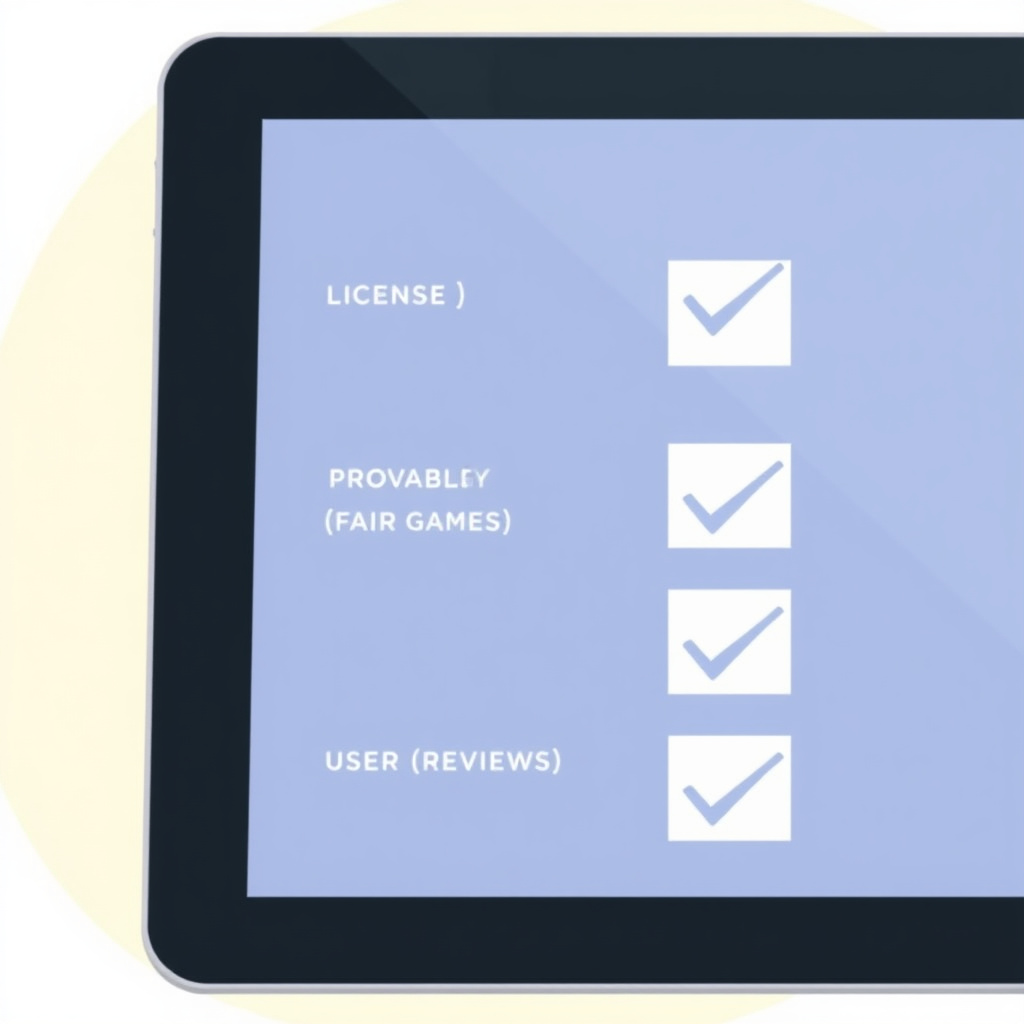
This is where people get burned. A flashy welcome bonus means absolutely nothing if the site is running a scam — and some of them are. I look for three things, minimum: a gaming license (even Curaçao, because at least it shows some accountability), a genuine reputation in player communities, and provably fair technology. That last one matters. Provably fair means you can cryptographically verify the outcome of any game wasn\'t manipulated. It\'s not perfect but it\'s something.
Vetting sites yourself takes time — real time, not a five-minute Google. That\'s why dedicated review resources covering crypto gambling platforms exist and are worth using. Read the analysis, look at withdrawal complaints, check if people actually got paid. Don\'t deposit until you\'ve done at least 20-25 minutes of homework. Seriously.
Key Benefits and Real Risks of Betting with Crypto
Honest accounting time. The benefits are real:
- Speed: Payouts in minutes. This alone changes the experience completely.
- Privacy: Your bank never sees it. Your sensitive financial data stays off the casino\'s servers.
- Accessibility: Bypasses the geographic and banking walls that have locked U.S. players out for years.
And the risks — equally real, arguably more important to understand:
- Volatility: Your $500 win could be $380 by morning. Bitcoin moves. Sometimes violently. This isn\'t theoretical — it happens constantly.
- No Recourse: Wrong wallet address? Scammy site? Funds gone. No chargeback. No dispute process. No one to call. The transaction is done and it cannot be undone.
- Security: You\'re responsible for your own security in a way traditional banking never required. Your wallet gets compromised — that\'s it. Everything in it, gone.
Best Practices for U.S. Players Betting with Crypto in 2025
If you\'re going in — and plenty of people will, reasonably — go in smart. A few rules I\'ve stuck to:
- Use a Separate Gambling Wallet: Never, ever fund gambling from your main holdings wallet. Set up a dedicated hot wallet. Only keep in it what you\'d be comfortable losing entirely. Not \'okay losing.\' Comfortable losing.
- Understand Tax Obligations: IRS treats crypto as property. Every cashout is potentially a taxable event. Keep records — every transaction, every date, every amount in USD at time of transaction. It\'s not optional and \'I didn\'t know\' is not a defense that works.
- Prioritize Security: 2FA on everything. Strong unique passwords — not variations of the same password. For any meaningful crypto holdings, hardware wallet. Not negotiable.
- Bet in Fiat Terms: Always know what 0.001 BTC actually means in dollars before you bet it. It\'s very easy to disconnect when you\'re thinking in coin units rather than real-world value. Don\'t let that happen to you.
What to Expect Next — The Future of Crypto Gambling in America
Stablecoins — USDT, USDC — will keep growing in gambling contexts. They offer transaction speed and privacy without the volatility, which is a legitimately compelling combination. I think within 97-98% of serious crypto gambling platforms within two years will have stablecoin support as a default option, not an afterthought.
Web3 casinos — built on decentralized infrastructure, fully transparent on-chain — are emerging. Real ones, not just marketing copy slapped on a traditional site. NFT integration too, not as gimmicks but as actual utility: VIP access, unique game assets, verifiable prizes. Whether that goes mainstream or stays niche — no idea. Genuinely no idea.
The regulation question looms over all of it. Will U.S. states eventually create licensing frameworks for crypto-native casinos? Almost certainly yes. When? Anyone\'s guess — could be 2026, could be 2031. For now the offshore gray market is where it lives, messy and unregulated and occasionally exciting in ways that regulated markets deliberately aren\'t. Navigate it carefully. The opportunity is real. So is the downside.