-
How to Reduce System Downtime Risks: A Practical Guide for Tech and Crypto Platforms
How to Reduce System Downtime Risks: A Practical Guide for Tech and Crypto Platforms
System downtime is expensive everywhere. In crypto and high-stakes tech platforms, it can be catastrophic. A five-minute outage on a trading platform during a volatile market move can trigger liquidation cascades, wipe user trust, and generate SLA penalty claims — all simultaneously. Understanding how to reduce system downtime risks is not optional for teams running this kind of infrastructure; it is a core engineering responsibility.
This guide walks through the full picture: finding failure points before they find you, building resilient architecture, setting up monitoring that actually catches problems early, and establishing response processes that work under pressure.
Why Downtime Hits Harder in Crypto and Tech
Downtime in crypto environments carries consequences that go well beyond a frustrated user refreshing their browser. The financial and reputational costs are immediate and often irreversible.
When an exchange goes offline during peak volatility, users cannot execute trades or manage positions. That is not an inconvenience — for leveraged traders, it can mean forced liquidations they had no chance to prevent. Validator nodes that go offline miss block rewards. DeFi protocols with availability issues can create arbitrage windows that drain liquidity pools. And unlike a SaaS tool going down for an hour, a crypto platform outage often triggers immediate questions about fund safety, regardless of the actual cause.
On the Web2 infrastructure side, a Service Level Agreement (SLA) breach carries direct financial penalties and contract risk. For platforms that aggregate third-party services — payment rails, data feeds, custody APIs — the blast radius of a single failure point extends far beyond the team that caused it.
The intersection of security and availability adds another layer. In crypto specifically, a breach and a downtime event often look identical from the outside. Whether the root cause is a DDoS attack or an unplanned database failure, the user experience is the same: the platform is unavailable. That perception problem compounds the actual technical one.
Identify Your Highest-Risk Failure Points
Before you can reduce downtime risk, you need a clear map of where your system is most likely to break. Start with a single-point-of-failure audit across your entire stack.
Work through each layer methodically. At the infrastructure level, ask: if this component fails right now, what stops working? A single database with no replica, a single API gateway with no fallback, a DNS configuration pointing to one IP — these are the obvious ones. But teams running blockchain-facing systems also need to examine their node infrastructure. A DeFi application that depends on a single RPC endpoint is one network hiccup away from going dark.
At the application layer, look for processes that have no redundancy: background workers that run on a single machine, cron jobs with no dead-letter handling, webhook consumers with no retry logic. These do not cause outages immediately, but they create cascading failures when something else goes wrong.
Document every external dependency. Third-party data feeds, oracle networks, CDN providers, cloud regions — each of these is a risk vector you do not fully control. A dependency map is not a one-time document; it needs to reflect your current architecture, not the one you had six months ago.
Prioritize by impact and likelihood. A failure point that would take down your entire trading engine ranks above one that disrupts a secondary analytics dashboard. Focus remediation effort where the damage is largest.
Build Redundancy Into Your Infrastructure
Redundancy means designing your system so that no single component failure causes a total outage. Implemented well, it makes downtime events recoverable in seconds rather than hours.
Load balancing is the starting point for most teams. Distributing incoming traffic across multiple application servers means one server going down does not take the service with it. This applies equally to API layers, RPC nodes, and validator setups — any system that handles meaningful request volume should sit behind a load balancer.
Geographic distribution takes this further. Running infrastructure in a single cloud region means a regional outage (they do happen) is your outage. Multi-region deployments, or a multi-cloud architecture where cost allows, eliminate that dependency. For lean crypto teams that cannot justify full multi-cloud complexity, a primary region with a hot standby in a second region is a practical middle ground.
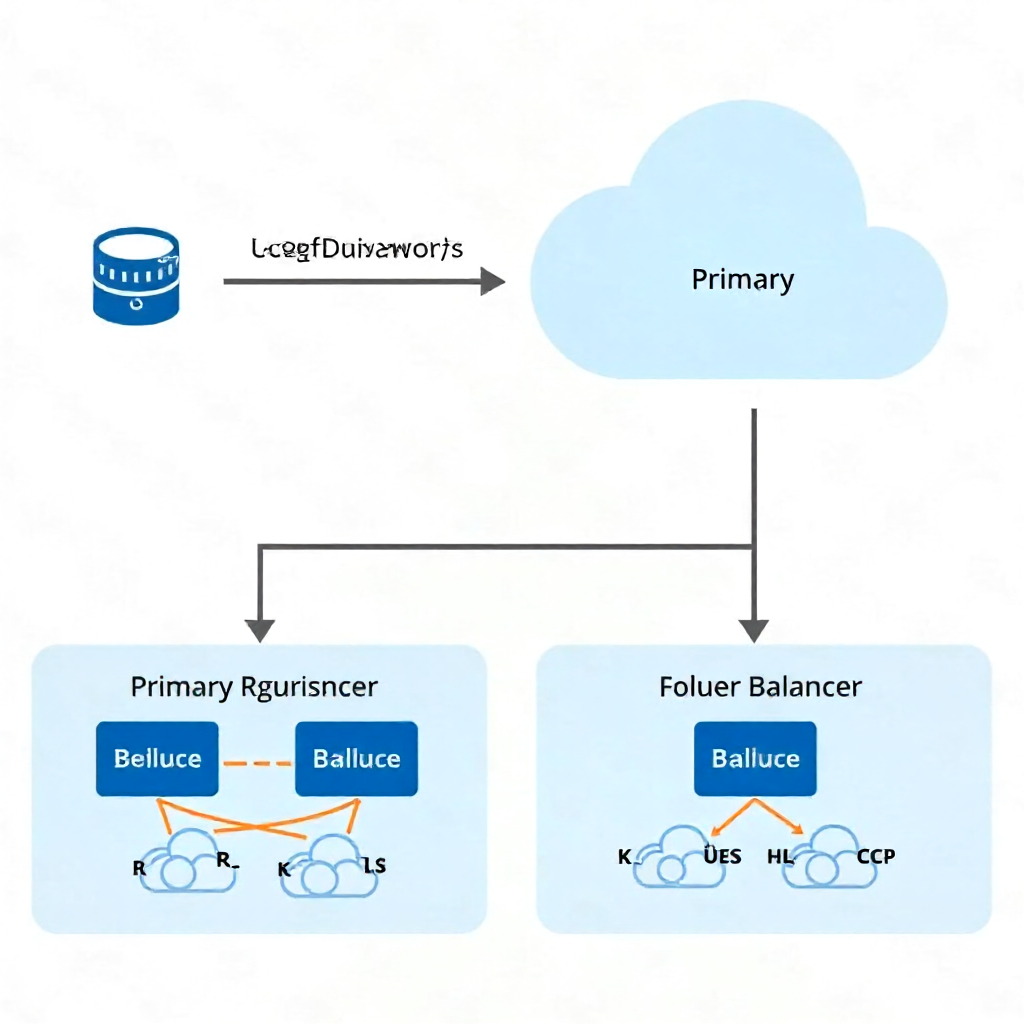
Failover systems are what make redundancy operational rather than theoretical. Automatic failover — where the system detects a failure and switches traffic to the backup without manual intervention — is the standard for high availability architecture. Manual failover is better than nothing, but it introduces response lag that compounds during incidents when engineers are already under pressure.
For blockchain-facing systems, node redundancy deserves specific attention. Running multiple RPC endpoints from different providers, and using a routing layer that falls back automatically when one is unresponsive, is one of the highest-leverage changes a crypto development team can make. Validator setups should use client diversity — running the same validator logic on different client implementations — to avoid a single client bug taking down your entire validator operation.
Set Up Proactive Monitoring and Alerting
Proactive monitoring means detecting degradation before it becomes a full outage. The goal is to catch problems in the first two minutes, not the first twenty.
Uptime monitoring is the baseline. External checks that test your endpoints from multiple geographic locations give you an honest signal — not just whether your internal systems think they are healthy, but whether real users can actually reach them. Tools in this category range from open-source options like Uptime Kuma to managed services; the specific tool matters less than having external verification running continuously.
Latency monitoring catches a category of problems that uptime checks miss. A service that responds in 8 seconds instead of 200 milliseconds is technically "up" but functionally broken for users. Set latency thresholds and treat threshold breaches as incidents, not warnings to investigate later.
For crypto infrastructure specifically, on-chain metrics belong in your monitoring stack. Block time anomalies, mempool congestion, validator participation rates, and smart contract event volumes can all signal problems before they surface as user-visible failures. Most teams running validator nodes or DeFi protocols should be tracking these alongside their standard infrastructure metrics.
Alert thresholds need calibration. Alerts that fire too frequently train engineers to ignore them. Set thresholds that represent genuine service degradation, not normal variance. Route critical alerts to a channel that demands immediate attention — and make sure someone is actually responsible for responding at any hour.
Create and Test an Incident Response Plan
An incident response plan is a documented, practiced process for handling outages. Without one, teams improvise under pressure — which reliably makes incidents longer and more damaging.
The core components of a functional IR plan are straightforward. First, clear role assignments: who declares an incident, who leads the technical response, who handles external communications. In a crypto context, external communications often means user-facing status updates and sometimes regulatory notifications — both of which have time pressure attached. Second, an escalation path that specifies exactly who gets contacted at each severity level, and how. Third, documented runbooks for your most likely failure scenarios — database failover steps, RPC endpoint switching procedures, rollback processes for recent deployments.
Rollback capability is worth treating as a first-class engineering concern, not an afterthought. Every deployment should have a documented rollback path. Teams that skip this are betting that every release is perfect — a bet that eventually fails.
The most important thing about an IR plan is that it gets tested. Tabletop exercises walk the team through a simulated incident scenario and identify gaps in the process before a real event exposes them. Game days — where you intentionally cause controlled failures in a staging environment — are more demanding but provide stronger validation. Run drills at least quarterly. Plans that exist only as documents atrophy quickly.
Apply Crypto-Specific Risk Controls
Beyond general infrastructure resilience, crypto platforms face a set of availability risks that are specific to the blockchain environment and require targeted controls.
Smart contract audits are a direct downtime risk vector. A bug in a deployed contract can halt protocol operations entirely — not because infrastructure failed, but because the on-chain logic itself is broken or exploited. Regular audit cycles with reputable firms, combined with timelocks on upgrades and emergency pause mechanisms built into contracts, give teams the ability to respond to discovered vulnerabilities without full protocol downtime. A well-documented approach to smart contract security treats auditability as an architectural requirement, not a pre-launch checkbox.
Validator client diversity, mentioned in the redundancy section, deserves emphasis here. The Ethereum network's experience with supermajority client risks demonstrated that running a single client implementation across a large portion of validators creates systemic downtime risk when that client has a bug. For teams running validator infrastructure, distributing across at least two client implementations is standard risk management.
RPC endpoint redundancy is frequently underestimated by DeFi teams. Applications that make direct calls to a single RPC provider are fully dependent on that provider's uptime. Routing layers like those provided by open-source libraries or aggregator services that automatically failover between multiple RPC endpoints significantly reduce this exposure.
On-chain circuit breakers — mechanisms that pause trading or withdrawals when anomalous conditions are detected — are a pattern used by mature DeFi protocols to limit damage from both technical failures and security incidents. They add complexity, but for protocols handling significant value, the trade-off is usually worth it.
Measure, Review, and Improve Continuously
Resilience is not a state you reach; it is a practice. One-time infrastructure investments degrade without ongoing attention, and new failure modes emerge as systems evolve.
Post-incident reviews — sometimes called post-mortems — are the core mechanism for turning incidents into improvements. Conduct a review after every significant outage within 48 hours while context is fresh. The goal is not blame but a clear account of what happened, what detection and response looked like, and what specific changes would prevent recurrence or reduce impact. Track whether those changes actually get implemented.
Define uptime KPIs that map to your SLA commitments and user expectations. For crypto exchanges, high availability (HA) targets typically sit at 99.9% or above — roughly 8.7 hours of allowable downtime per year. Protocols handling DeFi liquidity often target higher. Measure actual uptime against these targets monthly and treat consistent misses as engineering priorities, not acceptable variance.
Dependency audits should happen on a schedule, not just after incidents. As your system changes, your risk map changes. A service that was non-critical six months ago may now sit in a critical path. Catching that drift before it causes an outage is far less expensive than discovering it at 2 AM during a market spike.
The compounding effect of small, consistent improvements to your resilience posture is significant. Teams that treat uptime as a continuous engineering practice — rather than a crisis response discipline — spend dramatically less time in incidents over any twelve-month period.
Frequently Asked Questions
What is an acceptable uptime percentage for a crypto exchange?
Most crypto exchanges target 99.9% uptime or higher, which translates to roughly 8.7 hours of downtime per year. High-volume or institutional-grade platforms often aim for 99.99% (under an hour annually). The right target depends on your SLA commitments and the financial consequences of downtime for your specific user base.
What is the difference between disaster recovery and high availability?
High availability (HA) focuses on preventing downtime through redundancy and automatic failover — the system stays up through a failure. Disaster recovery (DR) is the broader plan for restoring service after a failure that HA did not prevent. HA minimizes the probability and duration of outages; DR handles the worst-case scenarios where systems need to be rebuilt or restored from backup.
How often should incident response plans be tested?
At minimum, run a tabletop exercise or game day drill quarterly. Teams operating critical infrastructure — crypto exchanges, DeFi protocols, validator networks — benefit from testing more frequently, especially after significant architecture changes or after any real incident that revealed process gaps.
Can smart contract bugs cause system downtime?
Yes. A vulnerability in a deployed smart contract can halt protocol operations entirely, either because an attacker exploits it or because the team deploys an emergency pause. This is why smart contract audits are an availability concern, not just a security concern. Emergency pause mechanisms and upgrade timelocks are architectural features that preserve the ability to respond without full downtime.
What monitoring tools are commonly used for blockchain infrastructure?
Teams running blockchain infrastructure commonly use Prometheus and Grafana for metrics collection and visualization, along with external uptime checkers for endpoint monitoring. For on-chain monitoring, tools like Tenderly, Forta, and custom alert scripts against indexed chain data are widely used. The specific stack matters less than having coverage across both infrastructure-level and on-chain metrics with well-calibrated alert thresholds.